
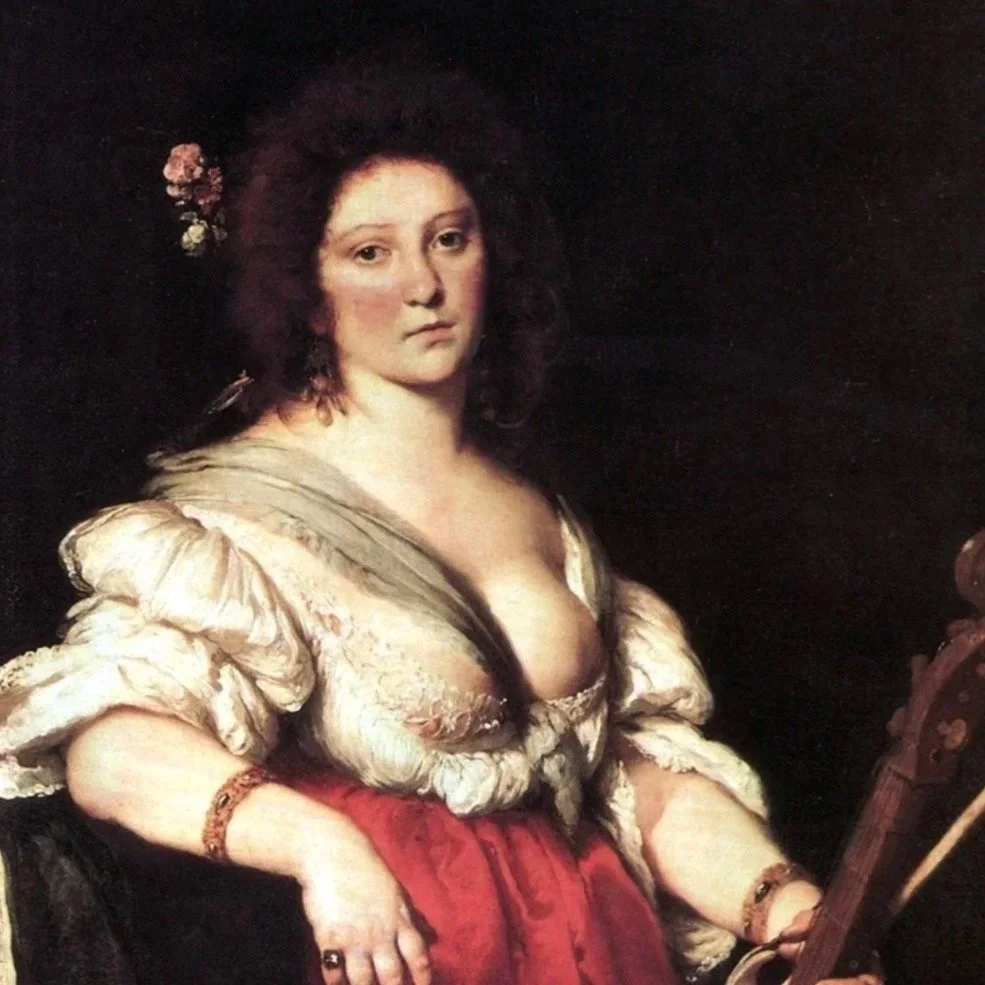
Heroines of the Seicento
Heroines of the Seicento brings together music by women who wrote, performed and published in seventeenth century Italy. Scenes from Francesca Caccini’s La liberazione di Ruggiero provide a theatrical frame for songs and cantatas by Barbara Strozzi, Antonia Bembo, Lucia Quinciani and Francesca Campana, with sacred and instrumental music by Isabella Leonarda.
Their works are heard alongside sonatas and canzonas by Uccellini, Falconieri, Pandolfi Mealli, Merula and Marini. Many of these instrumental works bear women’s names, creating a further thread through the programme. With soprano, strings and continuo, the concert moves between theatre and chamber music.
MUSIC BY
Francesca Caccini • Barbara Strozzi • Isabella Leonarda • Antonia Bembo • Lucia Quinciani • Francesca Campana • Marco Uccellini • Andrea Falconieri • Giovanni Antonio Pandolfi Mealli • Tarquinio Merula • Biagio Marini • and their contemporaries
THE DRAMATIC FRAME
First performed in Florence in 1625, Caccini’s La liberazione di Ruggiero is the earliest surviving opera by a woman. Excerpts return across the programme, giving the concert a theatrical spine around which shorter vocal works and instrumental pieces unfold.
DIFFERENT MUSICAL LIVES
Caccini worked at the Medici court in Florence, Strozzi published her music in Venice, Leonarda composed within an Ursuline convent in Novara, and Bembo built a new musical life in Paris. Their work ranges from staged drama and sacred motet to chamber song and instrumental sonata. Heroines of the Seicento brings these distinct voices together without treating them as a single school.
WATCH
IN CONCERT
University of Sheffield Concerts
Firth Hall, 20 November 2026
FOR PROMOTERS
Heroines of the Seicento is conceived for soprano, strings and continuo. The full evening version runs for approximately 90 minutes with an interval. Shorter versions can be developed from the same repertoire to suit the venue and concert format.
The full ensemble comprises soprano, two violins, a bass string player, theorbo and harpsichord. Repertoire and forces can be adapted while preserving Caccini’s dramatic framework and the programme’s focus on women composers.
Representative running orders and technical information are available on request.
Performers
Bellot Ensemble - New Generation Baroque Ensemble